My AC shut off by itself and will not restart. Why?
A clogged condensate drain tripping the float switch is one of the most common causes. Breaker trips, a blown low-voltage fuse and safety switch activations are the other frequent ones.

Kathleen is a community area northwest of Lakeland, and homes there run their cooling systems under the same demanding Central Florida conditions as the rest of the county. The practical result is heavy annual run hours on every motor, coil and drain in the system.
Repair needs here can span the full range, including condensate drainage, outdoor coil condition and heat-stressed electrical components.
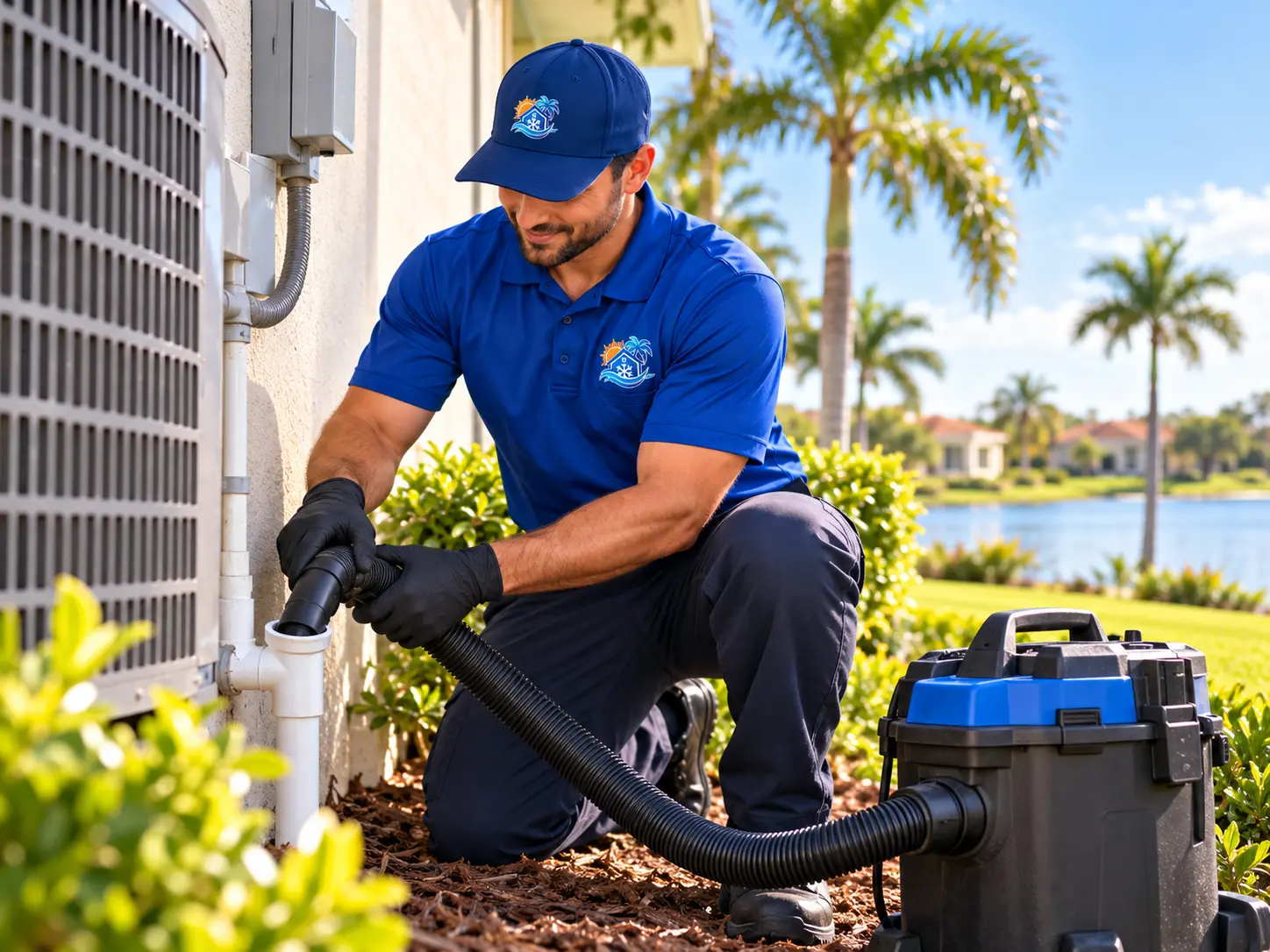
A running air conditioner produces a steady stream of condensate all season. Drain lines accumulate biological growth in that constantly wet environment, and dust from the airstream combines with it to form a plug — typically at a trap, an elbow or the exterior termination.
When the drain plugs, most systems shut down on a float switch, which many homeowners interpret as an electrical or thermostat failure. Clearing the line, cleaning the pan and verifying the float switch resolves it, and periodic attention prevents the repeat.
Outdoor coils in this kind of setting collect grass clippings, pollen, seed fluff and dust. A coated condenser coil cannot reject heat efficiently, which raises operating pressures, reduces cooling capacity, increases electricity use, and puts extra load on both the compressor and the condenser fan motor.
Keeping vegetation trimmed back, keeping mulch and clippings away from the base, and having the coil cleaned during routine service protects capacity and component life.
The failures that are genuinely preventable in this climate are a short list: drain clogs, coil fouling, filter neglect and capacitors drifting out of specification. Attention to those does not guarantee a system will never break down, but it addresses the most predictable causes of a mid-summer failure.
The links below cover the cooling problems homeowners most often describe when they call. Each page explains the symptoms, likely causes and what a repair involves.
Repair cost depends on which component failed, how much diagnostic time the fault takes, parts availability, equipment access and whether refrigerant work is involved. The cost guide explains those factors, and the AC repair cost calculator turns your symptoms into a broad planning range. Neither is a quote — an accurate price follows a diagnosis.
A clogged condensate drain tripping the float switch is one of the most common causes. Breaker trips, a blown low-voltage fuse and safety switch activations are the other frequent ones.
It depends on the surroundings. Units near lawns, fields or heavy vegetation collect debris faster and benefit from more frequent cleaning.
It addresses the most predictable failures — drains, coils, filters and aging capacitors — and gives you measured values to compare season over season.
Residential air conditioning repair across Lakeland and the surrounding communities.
Central Lakeland homes, including older housing where equipment placement and drainage often shape the repair.
Read moreAn established Lakeland neighborhood where older ductwork and indoor equipment placement often influence cooling performance.
Read moreHomes near the lake, where humidity control and outdoor equipment condition can matter alongside cooling repairs.
Read moreA broad area of Lakeland communities where attic air handlers and whole-system diagnostics come up frequently.
Read moreCommunities north of central Lakeland, with a mix of system types and ages needing straightforward diagnostics.
Read moreA community area south of Lakeland where larger homes and longer duct runs make airflow diagnostics important.
Read moreA community area north of Lakeland where equipment exposure and refrigerant-side diagnostics often matter.
Read moreDescribe what your air conditioner is doing and we can talk through the likely causes and current availability.
211 E Main St, STE #453, Lakeland, FL 33801