Can a clogged drain line stop my AC from running?
Yes. Most systems have a float switch that interrupts the control circuit when water backs up. The system simply will not start, which often gets mistaken for a thermostat or electrical failure.

An air conditioner dehumidifies as it cools, and in Central Florida that means a running system produces a meaningful volume of water every day. All of it has to leave the house through the condensate drain. When that path clogs, one of two things happens: a safety switch shuts the system down, or water overflows the drain pan and finds a ceiling, a wall or a closet floor.
This is one of the most preventable service calls in residential air conditioning, and also one of the most common in humid climates.
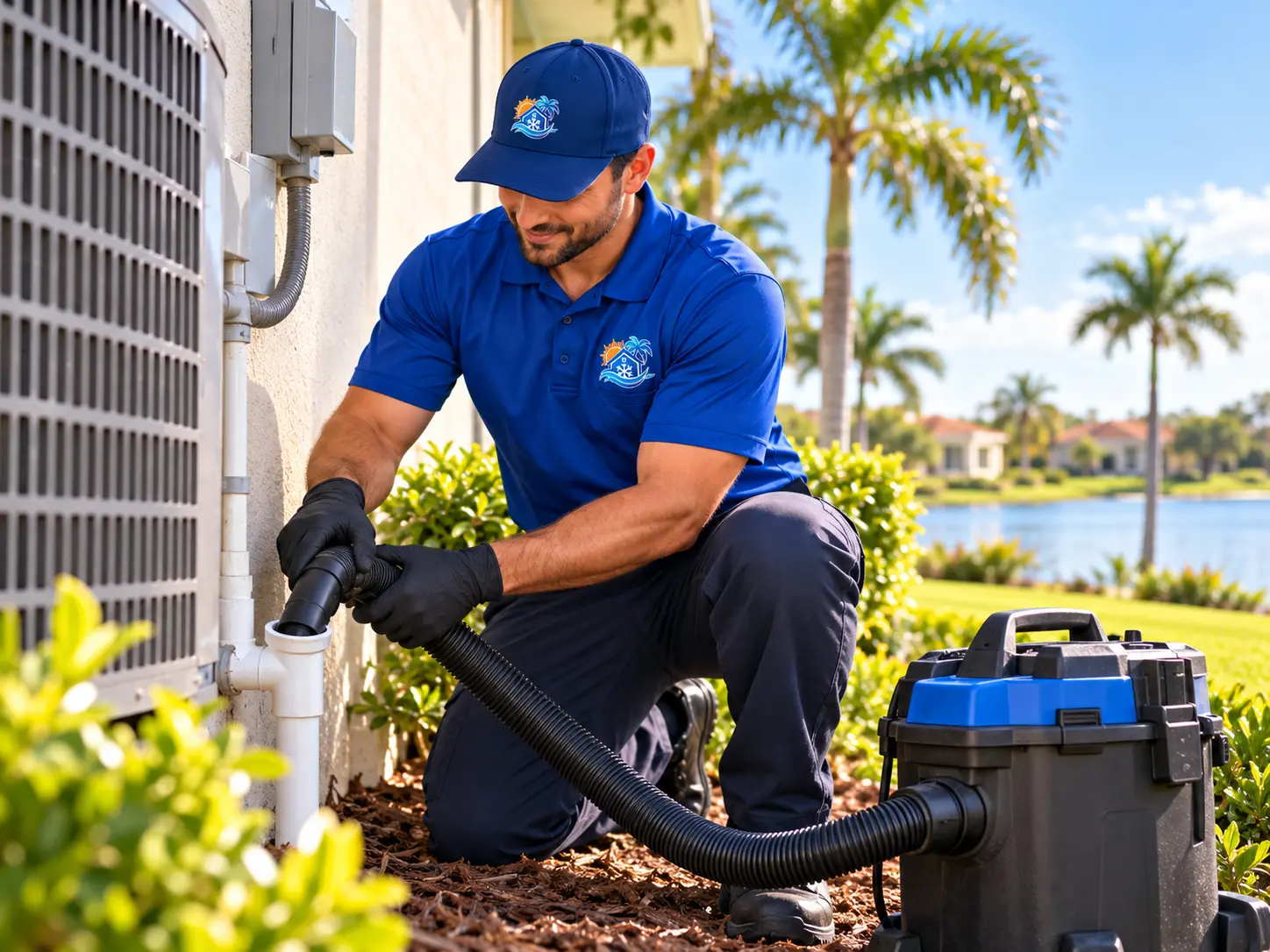
The drain pan and line stay wet all season. That environment grows algae and biological slime, which combines with dust that gets past the filter and settles on the wet coil. Over time the mixture forms a plug, usually at a trap, an elbow or the termination point.
Long horizontal runs with insufficient slope, undersized piping, and installations without accessible cleanouts all make clogs more likely and harder to clear.
The standard approach is to clear the blockage from the correct direction and then verify flow. That typically means applying vacuum at the exterior termination to pull the plug out rather than pushing it deeper, clearing and cleaning the pan, flushing the line, checking the trap, and confirming that water runs freely end to end.
The float switch gets tested at the same time. That switch is the device that shuts the system down before water overflows, and a switch that has failed in the closed position offers no protection at all — which is how ceilings get damaged.
Attic air handlers should have a secondary drain pan under the unit, and an emergency drain or an overflow switch tied to it. If you see water dripping from an eave on the exterior of the house, that is the secondary system doing its job and telling you the primary drain is blocked. It is a warning, not a solution — the primary drain still needs to be cleared.
Keeping the filter clean reduces the dust that feeds the clog. Periodic flushing of the line during the cooling season helps, as does having the drain and pan checked during routine maintenance. Avoid pouring harsh chemicals into the line — some damage PVC joints, coil surfaces or pan materials.
For broader planning numbers, see the AC repair cost guide for Lakeland or try the repair cost calculator. Both give educational planning ranges rather than quotes.
Yes. Most systems have a float switch that interrupts the control circuit when water backs up. The system simply will not start, which often gets mistaken for a thermostat or electrical failure.
The usual cause is a blocked condensate drain overflowing the pan. A frozen coil that has thawed, a cracked pan, or a disconnected drain fitting can also do it.
In humid climates it is commonly included in routine seasonal maintenance. Homes with heavy dust or pets may need attention more often.
It is a common suggestion, but strong chemicals can damage pans, fittings and metal components. Physical clearing plus an appropriate flush is safer for the equipment.
The indoor cabinet that holds the blower, evaporator coil, drain pan and control board — and the source of many cooling faults.
Read moreThe indoor coil is where heat and humidity leave your air. Fouling, corrosion and leaks all show up as poor cooling.
Read morePreventive attention to filters, coils, drains and electrical components — the failures most worth avoiding.
Read moreThe system runs but the house never reaches the set temperature. Start with the simple checks, then narrow down the mechanical causes.
Read moreDescribe what your air conditioner is doing and we can talk through the likely causes and current availability.
211 E Main St, STE #453, Lakeland, FL 33801