How often should AC maintenance be done?
Once a year is a common baseline, and many Florida homeowners prefer to have it done before the heaviest cooling months. Systems that run nearly year-round may benefit from more frequent attention.

Cooling equipment in Central Florida runs a much longer season than equipment in most of the country. More run hours mean more wear on motors, more condensate through the drain, more dust across the coils, and more heat exposure for electrical components.
Maintenance will not make a system immortal, and no honest description of it should suggest otherwise. What it does reliably is catch the small, cheap problems — a clogging drain, a capacitor drifting out of tolerance, a coil starting to foul — before they become the calls that happen on the hottest afternoon of the year.
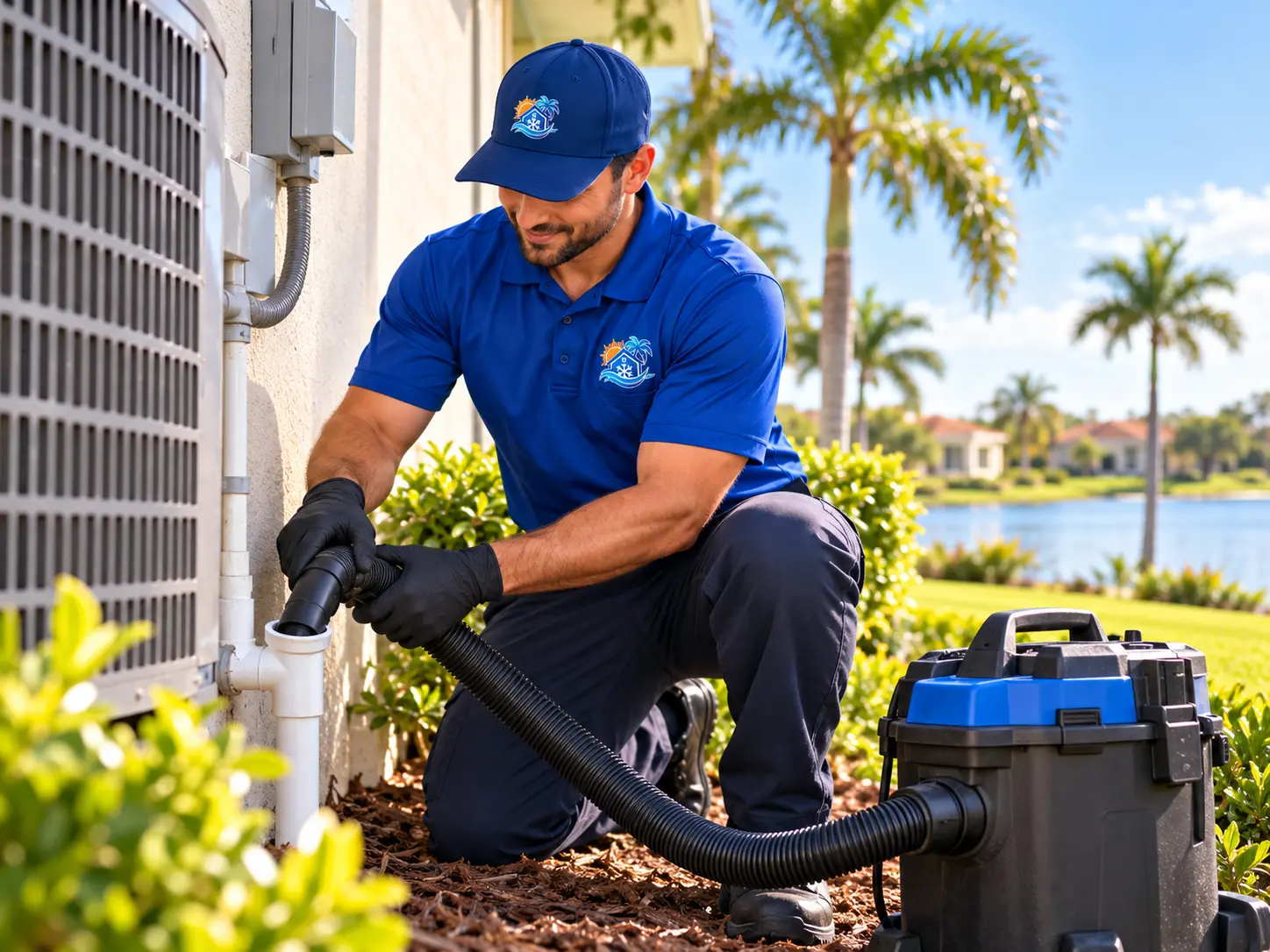
In a humid climate, condensate volume and biological growth in the drain line make clogs the single most predictable maintenance-related failure. Clearing the line before it plugs prevents both the shutdown and the potential water damage.
Coil condition is the other big one. Outdoor coils collect grass clippings and pollen; indoor coils collect whatever gets past the filter. Both reduce capacity gradually enough that homeowners often do not notice until the system cannot keep up on a hot day.
A maintenance visit is an inspection and a set of corrective tasks at a point in time. It reduces the likelihood of certain failures. It does not guarantee that a compressor will not fail, that a motor will not seize, or that a coil will not develop a leak. Anyone promising that is overselling.
What it does deliver is information: measured values you can compare next season, early notice of a component drifting out of spec, and a chance to schedule a repair rather than react to a breakdown.
Change filters on a realistic schedule for your household rather than the packaging estimate. Keep two to three feet clear around the outdoor unit and keep grass clippings off the coil. Keep supply registers open. Watch for water near the air handler and for ice on the refrigerant lines. Notice changes in sound, run time and airflow — those are usually the first symptoms.
Service before the heaviest cooling demand makes practical sense, since that is when marginal components tend to fail. If a system is already showing symptoms, a diagnostic visit is more appropriate than routine maintenance — maintenance is for healthy equipment.
For broader planning numbers, see the AC repair cost guide for Lakeland or try the repair cost calculator. Both give educational planning ranges rather than quotes.
Once a year is a common baseline, and many Florida homeowners prefer to have it done before the heaviest cooling months. Systems that run nearly year-round may benefit from more frequent attention.
It reduces the likelihood of the predictable failures — drain clogs, coil fouling, heat-stressed capacitors — but no maintenance program can guarantee a component will not fail.
It depends on filter type, pets, dust and run hours. Checking monthly during heavy cooling and replacing when light no longer passes through easily is a practical rule.
Attention to drains, coils and airflow still helps older equipment run better and can prevent water damage. It will not reverse age-related wear.
Humid climates produce a lot of condensate. When the drain clogs, the system either shuts down or puts water where it should not be.
Read moreOne of the most frequent air conditioning failures in Florida heat, and one of the most recognizable by symptom.
Read moreThe indoor coil is where heat and humidity leave your air. Fouling, corrosion and leaks all show up as poor cooling.
Read moreWhole-home ducted systems: outdoor condenser, indoor air handler, duct network and controls working as one.
Read moreDescribe what your air conditioner is doing and we can talk through the likely causes and current availability.
211 E Main St, STE #453, Lakeland, FL 33801